
Exchanges
Brookfield’s Connor Teskey on the Real Bottleneck in the AI Buildout
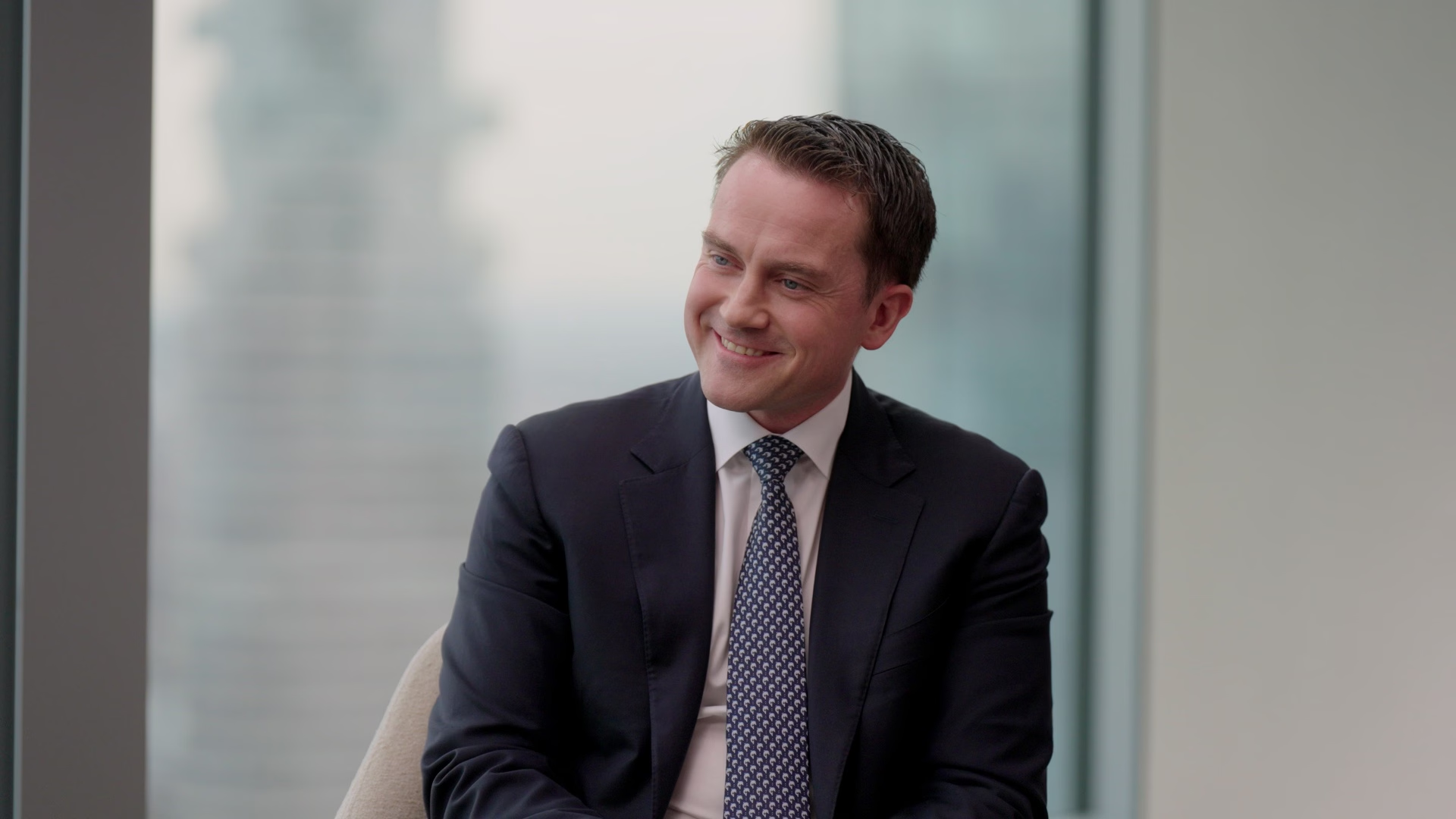
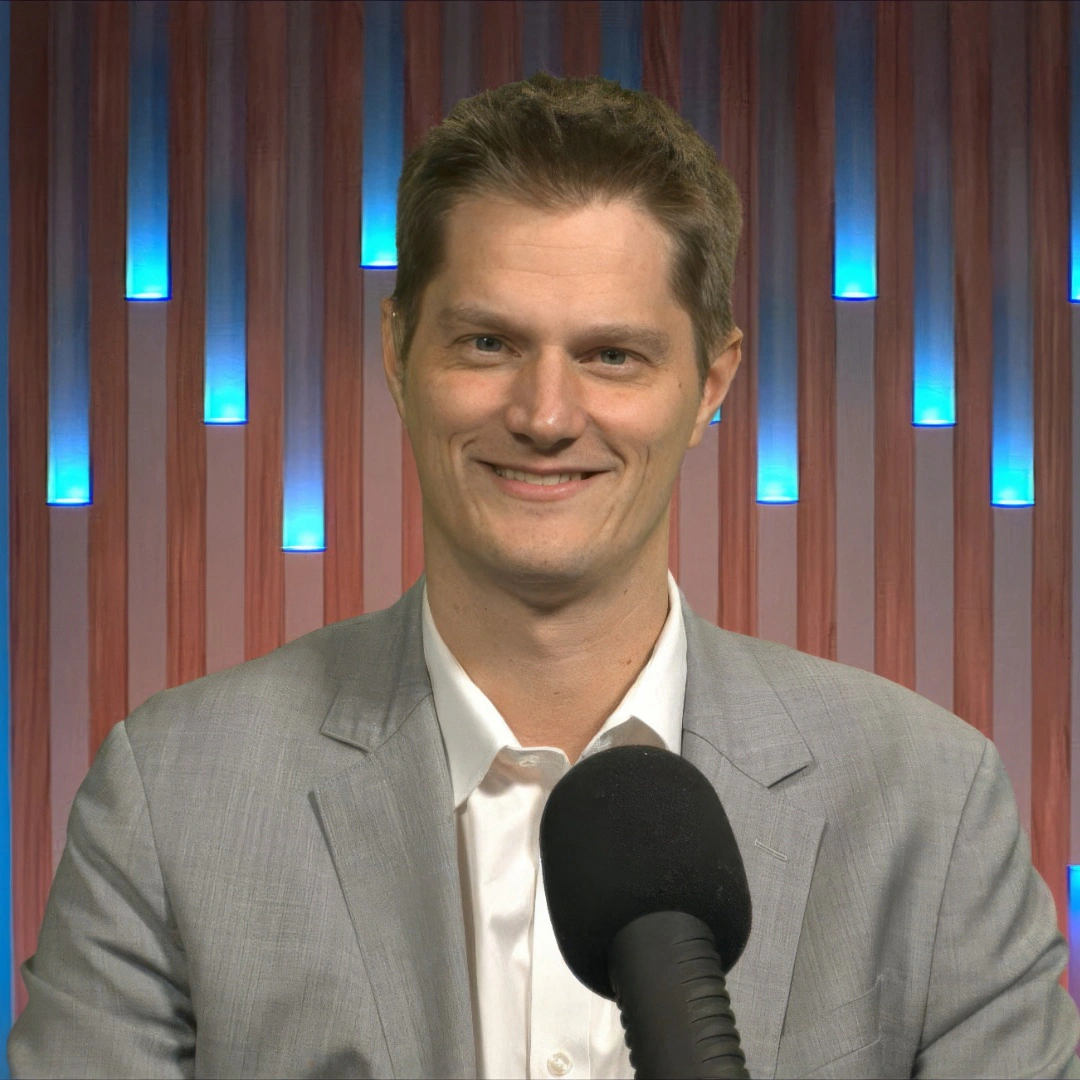
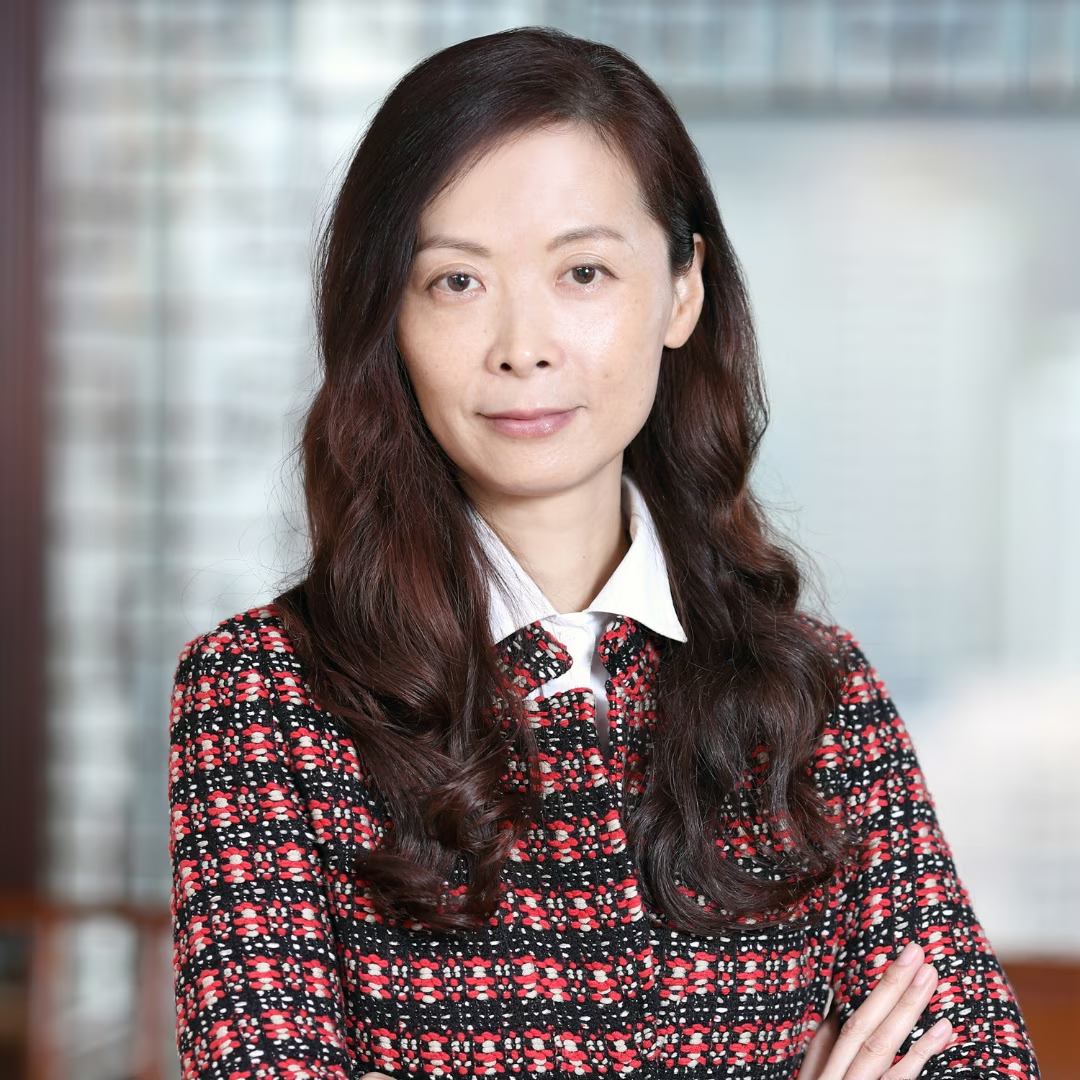
The bottleneck in the artificial intelligence (AI) buildout is neither capital nor demand, but rather the operational capability to develop land, secure a grid connection, and build the power supply, says Brookfield Asset Management CEO Connor Teskey on Goldman Sachs Exchanges: Great Investors. Indeed, one market misconception is that demand for data centers is somehow “fragile,” he says in this conversation with Alison Mass, chairman of Investment Banking in Goldman Sachs Global Banking & Markets. Teskey also shares his perspective on long-term investing, Brookfield's approach to building businesses and the evolution of its private credit platform.
Transcript:
Connor Teskey: Demand has become the critical input to growth for every major company in every major country around the world, and there is a scarcity of it.
The growth we're seeing across critical infrastructure assets and the overwhelming need for energy around the world goes so far beyond simply artificial intelligence.
Demand is up here and supply is down here. Even if demand growth was to slow, even if it was to plateau, even if it was to decline, there would still be a huge supply-demand imbalance to the providers.
It is perhaps the greatest capital need in the history of mankind. It's pretty exciting.
Alison Mass: Welcome to Goldman Sachs Exchanges: Great Investors. I'm Alison Mass. Today, I'm sitting down with Connor Teskey, CEO of Brookfield Asset Management. Connor joined Brookfield in 2012 at age 24. 14 years later, he runs the entire asset management business, managing approximately $1.3 trillion dollars across infrastructure, renewable power, real estate, private equity, and credit, while continuing to lead its energy group.
In this episode, we discuss Connor's transition to the CEO seat, Brookfield's AI infrastructure buildout across the US and Europe, and the firm's strategic expansion in credit.
Connor, welcome to Great Investors. It's so fantastic to have you here.
Connor Teskey: Thank you for having us.
Alison Mass: So, across all those asset classes that you play in, is there one that you're most excited about right now?
Connor Teskey: I'm probably a little bit biased. I have spent the last 10 years as part of the energy team, a business that's grown very, very rapidly. I still lead that business today. I think if there was one theme across Brookfield that is quite dominant right now, it's energy and infrastructure.
And a lot of the growth in that space, a portion of it is undoubtedly being driven by AI, and AI infrastructure is a huge theme at Brookfield. But the growth we're seeing across critical infrastructure assets and the overwhelming need for energy around the world goes so far beyond simply artificial intelligence.
And that is one that the capital needs are bigger than at any point in history. It is perhaps the greatest capital need in the history of mankind. And the returns are very attractive, and we see this theme not enduring for quarters or years, but through the end of this decade and beyond. It's pretty exciting.
Alison Mass: Yeah. Must be really fun for the energy team investors to have you sitting at the table.
Connor Teskey: Yes and energy's just a fun place to play right now. You know, in only four or five years, electricity is something that everyone took for granted, and now all of a sudden it is the single biggest bottleneck to growth for the greatest companies around the world and the largest countries around the world.
And being a provider of that is an exciting place to be.
Alison Mass: So let's continue on the theme of AI which you brought up. What's your read on the buildout?
Connor Teskey: If there was one headline or narrative that we hear a lot in the market that is detached from what we're seeing in the fundamentals on the ground, it's that the demand for AI infrastructure and the demand for the energy that supports it is in some way fragile. You know, we've seen the market react quite heavily to certain announcements.
Or a potentially more efficient model comes out, or a large hyperscaler walks away from one of its multiple thousands of data center leases, and the whole market reacts. That seems a little divorced from what we're seeing on the ground. Right now, demand is exceptionally high, and supply is only a small fraction of that demand.
Demand is up here, and supply is down here. And therefore, even if demand growth was to slow, even if it was to plateau, even if it was to decline, there would still be a huge supply-demand imbalance to the providers of those assets and those inputs into that ecosystem. So, obviously a huge amount of discipline is required.
These are huge projects. It's a large sum of capital that's going to go into the ground for multiple decades going forward, but the demand is absolutely overwhelming and that imbalance is not going to be disturbed by small changes. The other thing that we're seeing on the AI side is so much talk goes to the big numbers, cause the numbers are quite frankly --
Alison Mass: Staggering.
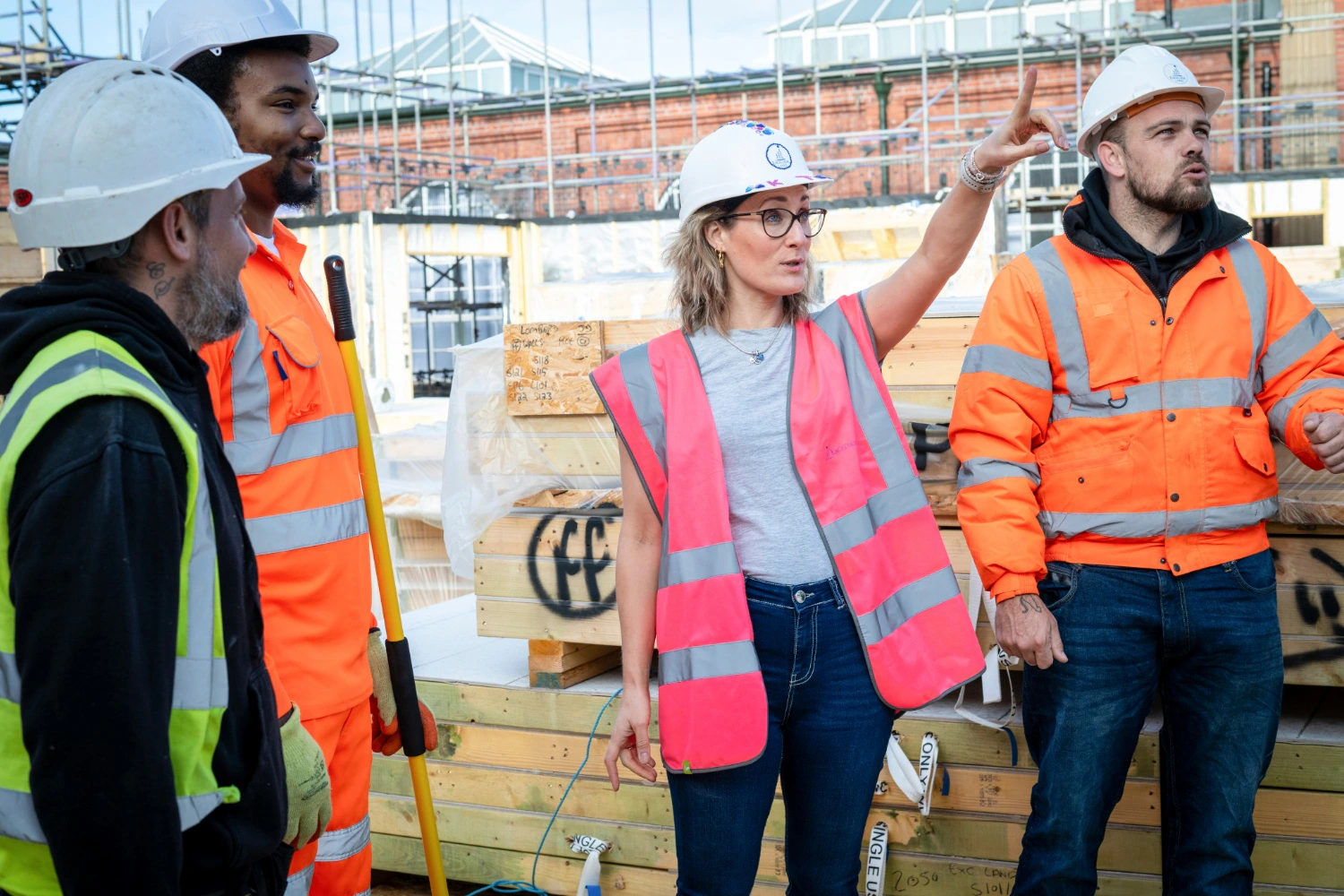
Connor Teskey: Staggering. Thank you. That is not the bottleneck. There is no shortage of capital, and there is no shortage of demand. The bottleneck is who can actually pull these projects out of the ground. Who has the capabilities to complete the land development, secure the grid connection, build the power supply, build and operate a large-scale gigafactory, provide the redundancy.
That is the scarce input. It is not capital. It is not demand. And we are increasingly seeing the market flow to not just simply those that can show up with big dollars, but those that can show up with both big dollars and big operating capabilities as well.
Alison Mass: All right, so you've already built significant AI infrastructure in the US, and now you're taking that push into Europe. So what is driving that expansion, and what do you think travels across the Atlantic well and what doesn't?
Connor Teskey: So both are going to see very significant buildouts, but the origins of those buildouts and the demand factors are going to be a little bit different.
We can have a thoughtful debate, but of the 15 greatest technology companies in the world, the vast majority of them are based here in the United States. And those corporates are driving a ton of corporate demand in an organic buildout of the AI infrastructure in this country. And that's really being driven by the large technology companies, the hyperscalers, and all of society in the United States is going to benefit from that.
What's interesting is Europe doesn't have that same concentration of homegrown, large-scale technology companies that can provide that corporate demand. That doesn't mean we're not seeing significant growth, but it's coming from two different places.
One, the large global technology companies. Yes, most of them are American, but they are global, so they are, of course, expanding into Europe as well. But the other demand driver that we think is underappreciated is we're actually seeing sovereigns step in, in places where that corporate demand is not going to be the catalyst for the AI buildout.
We're seeing the nation-states... What is AI? At its core, it's a productivity tool. It's designed to drive efficiency and enable more growth. We're seeing nation-states step in and say, "We don't want our population, our country, to be left behind in having access to those tools and those productivity gains in the future," so they will actually backstop the buildout of AI infrastructure.
And we've signed agreements in France, in Sweden, in Qatar, where the initial off-taker to support the buildout of AI infrastructure is not a hyperscaler, but actually a sovereign, and we call that sovereign AI. And we see that demand much more in places outside of the United States and or APAC where, where you do have those domestic global technology leaders.
Alison Mass: That's an interesting perspective. Sovereign AI.
Connor Teskey: Sovereign AI.
Alison Mass: So the power side of this isn't new territory for you, as you've talked about. It's where you started. You built most of the renewables business that's been long core to Brookfield. But the argument has changed. It used to be a climate case, and now it sounds like more of a commercial one, speed to market, availability, energy security. So has the thesis changed in your view, or has the customer changed? What has changed?
Connor Teskey: A lot has changed in the last five to 10 years. But the one thing I would say about our approach that's been quite helpful, and this existed long before my time, is our approach has always been driven by commercial. We don't take technology bets. We don't ever accept one basis point of return discount because of the decarbonization or energy transition impact of an investment.
We think you can make very attractive risk-adjusted returns that also provide those benefits to society. What has changed is demand has become the critical input to growth for every major company in every major country around the world, and there is a scarcity of it. There is a supply-demand imbalance that started at the end of the last decade, the late twenty-teens.
Interestingly, at that point, it wasn't driven by AI. It was driven by these global trends of reindustrialization and electrification. That created a supply-demand imbalance that in and of itself was going to exist for decades and provide multiple decades of electricity demand growth. And then AI took off and took that supply-demand imbalance and exaggerated it even further.
What we would say that we're seeing in our business is two things. Electrons are a commodity, but there is a lot more sophistication around electrons now. Counterparties don't just phone up and say they want power. They want power that's a certain shape in a certain location from a certain source for a certain duration.
And being able to evolve and meet those ever-evolving customer needs is very, very critical to us, and that's leading to the development of new technologies. I'll tell you, the fastest-growing segment of our energy business right now is energy storage. How do you get the joys of low-cost renewables but offset the issues of intermittency?
You offset it with energy storage and batteries, which is undoubtedly the fastest. That wasn't true five years ago. The other thing that we are seeing is because electricity has become such a critical bottleneck, the largest buyers and users of electricity around the world don't always just go to who can provide it at the lowest cost.
It is a very negative for a hyperscaler if they want to turn on a data center but the power supply isn't available yet. So rather than having 10,000 small suppliers who may or may not get a project delivered on time or on budget, we're increasingly seeing the largest users of electricity increasingly focus on a smaller number of scale providers who have the credibility to work through problems, deliver on time, deliver on budget, and really can be a partner to them in providing what is one of the most critical inputs.
And our business over the last five or 10 years, 10 years ago, we essentially sold power to utilities and governments. Today, we sell the most, majority of our power directly to corporates. And we work very much with those corporates to meet their evolving needs. And our relationships with them go beyond individual contracts to global scale framework agreements that just continue to grow and grow over time.
Alison Mass: That makes sense, certainty and ability to deliver.
Connor Teskey: It's far more value than picking up a penny here or a penny there on power price.
Alison Mass: So everything that you've described gets built with borrowed money, which brings me to credit. And in your story, there's a mix of organic and inorganic.
You've built a lot in-house, but you've also bought a majority stake in Oaktree, Howard Marks' firm back in 2019, and now full ownership, plus stakes in several other managers. So how do you decide what you're going to build versus what you're going to buy?
Connor Teskey: The build versus buy decision is one that we make every time we look to grow at Brookfield. It is always a build versus buy decision. And in general, we prefer to build it ourselves if we think we have the capabilities to do so because it's often less expensive.
And two, you can build it exactly how you want it. Sam Pollock, who's built our infrastructure business over the last 20 years, he's built an incredible market-leading franchise. It does not have a peer. If he wants to launch a new strategy, he's not going to go buy someone else to do it.
He's very likely going to use some internal resources to build the strategy from the ground up. However, from time to time, we see capabilities that we think it would be very difficult to replicate, or it would take us too long to replicate in order to capture what we think is a very large and attractive market opportunity.
And that, that was exactly Oaktree for us in 2019. We had a very large and market-leading equity franchise on the private investment side, but we did feel that credit was becoming a core pillar of private markets going forward. And could we have built a market-leading credit franchise over 10 or 15 years? Absolutely.
But we thought it was worth it to accelerate that process, and in hindsight, we think it was a great decision, and we couldn't be more thrilled with the partnership with Oaktree.
Alison Mass: So, staying on Oaktree for a second, how did that deal start, and how did you end up at the center of it?
Connor Teskey: Like a lot of things, some good fortune. I actually started in the private equity group at Brookfield when I joined the firm in Toronto almost 15 years ago.
One of the first things I was asked to review was actually an investment in another asset manager that was in need for capital, and I didn't really know where to start. I'd never looked at an asset management business before.
And after spinning my wheels for probably a few days, I had this idea, which was, well, if I can understand Brookfield's business model, I can probably use that as a base case to try and understand this other asset manager's model. And from that initial review we began, as part of that process, we simply began to track some of the other publicly traded alternative asset managers, largely to see how Brookfield could be doing better and how are we doing versus our peer set.
And at the beginning of 2018, we felt that Oaktree was not trading appropriately in the market, it was one of the names we tracked, relative to the incredible quality of that franchise and what we thought the long-term's earning potential would be.
And it's funny, I went to Bruce and I said, "Well, maybe we can just buy some shares and make a little bit of money." And Bruce said, "Fine, but, you know, maybe think could we do something a little bit more strategic with them?" And we took that away into our little lab and came up with this idea of privatizing the company but partnering with the founders and the existing management. And that was the transaction we did about 12 months later.
Alison Mass: Yeah, and the rest is history.
Connor Teskey: Yeah, it's been great.
Alison Mass: How would you characterize your approach to making investment decisions in general?
Connor Teskey: We have incredible resources around the world, expertise by asset class, by geography.
I think it is very important to try not to be an expert at everything. On any individual decision, there is probably someone at Brookfield who is more of an expert and more informed than I am, and I think being a great investor is knowing where that information is and pulling all that appropriate information in to make the most informed decision.
That would be point one. The second thing is there are no certainties. There absolutely are no certainties. When you get to a level of confidence where things are extremely likely and largely in your control, that's when you pull the trigger and you invest with conviction.
If you try and remove absolutely every risk and turn every variable into an absolute certainty, you will have a perfect track record, but you will make no investments. And I think it is very important to pass judgment of we are in control of enough of the variables here, and we have certainty over enough of the outcomes that we have a return profile that is downside protected and asymmetric to the upside.
And that's really our investing style. And then the last thing I would say is it's very important to be able to simplify things. We invest in extremely large assets on a scale that few around the world do. These are large businesses. It's always important to understand the very small number of key value drivers and understanding which ones do you have a strong view on, which ones are you in control of.
I think being able to simplify large but amazing businesses is very important to making good investment decisions.
Alison Mass: So, most of our listeners have heard of Brookfield, but fewer appreciate the range or the scale. So, give us the rundown, and one thing to flag for any of our listeners who still file you away as a Canadian company, you're headquartered in New York now. So, tell us a little bit about that journey.
Connor Teskey: Sure. So today, Brookfield is the leading global alternative asset manager focused on real assets. The firm and its predecessors were founded in 1899, and yes, our original origins were Canadian, but as we've become a scaled global financial firm, we operate in 50 countries around the world, and we're increasingly concentrated in the global financial centers with our headquarters here in New York.
Alison Mass: So we’ve seen a lot of transition in the leadership of the alternative asset management space over the last five years. You recently stepped into the CEO seat at the asset management business, taking over from Bruce Flatt, who built it, and who's still running Brookfield Corporation.
So, did you feel ready, and how did that transition happen?
Connor Teskey: So a lot of credit goes to not only Bruce, but the other senior leadership of Brookfield. This has been an incredibly methodical, incremental, continuous transition. Yes, we announced a change in titles earlier this year, but this transition has been happening for three years, and it probably has a number of years still to run.
And I remember, and I think we announced it on a Wednesday. Monday and Friday of that week didn't feel a whole lot different. And I think it really comes down to two things. One, Brookfield has created a culture where there's incredible senior mentorship, and they really coach young talent up from an early age and put people in a position to take on more responsibility early and be in a position to win.
And I was fortunate to have incredible mentors and be some of the beneficiary of that. To your question of whether or not you can feel ready, I always feel that there's a certain healthy level of insecurity is good. It keeps you sharp, it keeps you focused. But the fact that it was such a seamless and incremental transition, made it feel very easy.
Alison Mass: You’re a new leader at a relatively young age, and probably a decade younger than some of your peers who've been put into similar positions. Has that been an advantage?
Connor Teskey: One of the things that Bruce and other members of the senior leadership do feel is very important at Brookfield is mixing excellent experience and tenure and knowledge with young energy.
And that's something we do across all of our businesses. I'm fortunate coming into the role to have the most amazing set of senior partners and mentors who have decades of experience that we can draw on. But we love to continuously inject young energy and young perspective into our leadership, into our decision-making.
We think it's, one, important for having fresh perspectives, but two, it's also important to being relatable to an extremely large workforce of Brookfield employees that many of whom are on the younger side as well.
Alison Mass: So, what was the most useful thing that Bruce told you before you took the job that helped you in your first six months in the job?
Connor Teskey: Undoubtedly the thing, having been fortunate to work with Bruce and the other senior leaders for a number of years now that I find most helpful is just how calm and balanced they are when markets inevitably change. We like to forecast, we like to do due diligence, remove risk, things like that, but markets are always moving.
And one of the things that at the very beginning you almost feel a bit unnerved by it, but then you become accustomed to it. It's just the thoughtful, balanced, moderate approach to adjusting to the evolving environment that we all work and live in every day. When Bruce did tell me for the first time about the succession, the succession plan, your mind goes to a lot of places very, very quickly, and I'm sure he said a lot of things that day.
The one that always sticks out to me, which really grounded me very quickly, is he said, "Don't worry whether or not you're the right person. That was our choice, not yours. We just want to make sure this is what you want, and you're committed to doing it for decades to come." And I remember mind going a lot of different directions, and the second he said that, immediately things slowed down and it all became a bit more digestible.
Alison Mass: Yeah. That's very thoughtful because to your point earlier about we're all a little insecure, it takes your insecurity away because you didn't make the decision, they did.
Connor Teskey: Yeah. I'll be honest, I use Bruce's line now.
Alison Mass: Yeah, no, I think it's a good one. I may have to incorporate it myself. So how are involved are you now in the day-to-day investment decisions?
Connor Teskey: So, I sit on all the investment committees, so, oversee any time around the world that Brookfield deploys capital, but I think it's important to recognize with the scale of our operation, how we deploy capital. And the way Brookfield operates is we source, execute, and operate in an incredibly decentralized manner.
For every region around the world that we want to own or invest in assets, and for every asset class around the world, we have a dedicated local team, and those teams are empowered to know everything about that market, go find... know all the themes, know the value levers that are coming, position the business to capture that value, see the risks that are coming, position the business to mitigate that risk in a very decentralized manner. We actually allocate capital in a quite centralized group. And it's in that way that we can grow fast and be local in so many markets around the world, but we can also consolidate all that knowledge to use that global perspective to allocate capital to where we see the best risk-adjusted returns.
So myself and a number of the members of the senior team sit on that centralized investment committee. I always feel it would be the wrong approach for me to try to be the expert in a specific asset class or region where we've got a dedicated team that does it 24 hours a day, 7 days a week, 365 days a year.
I'm rarely questioning underwriting assumptions. We have experts for that. What we do on that investment committee is think more high level, more strategic in terms of our comments and our feedback.
One of the things your question triggers a little bit is, it seems to us a little bit silly to bet on a competitive advantage of simply being smarter than everyone into perpetuity.
You want to create structural and enduring competitive advantages that allow you to deploy capital very attractive risk-adjusted returns at an incredible scale and consistency that few can match. That is our brand.
So, we spend a lot of time focusing on enhancing those strategic, competitive and enduring competitive advantages such that it's not just making the next good investment, it's putting the firm in a position to make several good investments in the years and decades to come.
And that's things like focusing on changes in global themes, where is capital flowing, do we have the right people and the right expertise in the organization? That's where we spend a lot of time.
Alison Mass: So let's widen it out a little bit to the industry. What kind of growth do you expect in alternatives from here?
Connor Teskey: The growth in the alternatives industry is going to be very significant. I actually think it's very tough to see a scenario where the allocations in either the individual market or the institutional market slow. And very simply, the alternatives industry has grown over the last 20 plus years essentially on institutions beginning to and then increasing their allocation to alternatives.
And that's grown the industry for the last 20 years, and that, in and of itself, growing institutional demand could drive the growth of the industry for the next decade and beyond. But now there is this second additional growth lever, which we call the individual market. That's your, your high net worth or private wealth investor, that's your life insurance policy or annuity holder.
That is your 401k or your retiree market. In that segment of the market, the penetration is very low. If institutional investors are allocated somewhere in the, call it mid-teens range to alternatives and probably going up to 20% or 30% over time, that individual market is 2% or less today.
So, in terms of directional trend line, we don't see it slowing down. And it's not a trend or a fad, it's because of what alternatives can provide to those investors' portfolios that traditional portfolios don't have. Private market investments over the long term do come with a return premium because they are private and there is a slight liquidity premium.
But more importantly, they provide a huge amount of stability in portfolios, especially relative to public markets that are becoming increasingly volatile. Secondly, with many of the leading companies around the world staying private longer and with certain industries much more concentrated in the private markets, it can provide diversity to what they can get in a public portfolio.
And then, the last thing I would say is private capital very simply works better for certain types of investments. Think large infrastructure projects that are going to take two, three, four, five years to build and are going to be non-income producing for that period of time, then they turn on and they produce cash for the next four or five decades.
It's really different after they're producing cash, and that works really well in a quarterly-over-quarter reporting cycle. Those early years of putting dollars, non-income producing dollars in the ground doesn't work great in the public markets. So, whether it's returns, whether it's stability, whether it's diversification or access to some of the biggest growth trends and growth themes around the world, we view it as directionally a pretty strong certainty that the growth will continue to be there going forward.
Will it ebb and flow over that very strong growth trend line? Absolutely. And that will be driven by markets, that will be driven by performance of certain vehicles and things like that, but I think the trend line is pretty definitive.
Alison Mass: And as you say, as long as the asset classes continue to outperform the public market indices over any periods of time you look at, one, three, five, 10 years, the investments will flow in.
Connor Teskey: Absolutely. And they've proven to do that over decades.
Alison Mass: So last one before we go to our lightning round. You were a rower in college, I understand. So what did that teach you about leading?
Connor Teskey: Feels a long time ago. I wasted all my time growing up watching, following, playing sports.
Alison Mass: That's not a waste of time.
Connor Teskey: I still spend a lot of time on ESPN. Rowing is a kind of a funny sport. There's very little that's actually enjoyable about rowing itself. It's very - You get up early in the morning, you go somewhere that's often cold or wet in the dark, and you twist your back and pull as hard as you can 3,000 times in a row.
But it is one of the greatest team environments I think you can get in sports because it really is an environment where a crew is only as good as the weakest link. And it doesn't matter if you're the strongest person in the boat or the weakest person in the boat, if you do a little bit better, the whole boat goes faster.
And I think what it teaches you about discipline, what it teaches you about working really hard, and what it teaches you about teamwork, I'd say that those are some of the things we use every day in a much more different environment that we work in now.
Alison Mass: Okay, we like to end these conversations with sort of a quick answer round. So, what is your greatest strength as an investor?
Connor Teskey: Ability to simplify things.
Alison Mass: And what is the best advice you've ever gotten from outside the business?
Connor Teskey: To always remember that this is a people business. People will always do more deals and do more business that people they enjoy working with. This will always be a people business.
Alison Mass: Yeah, I agree. People want to do business with people they like and people they trust.
How do you spend your time out of the office? And I'm assuming it's not on a boat in crew.
Connor Teskey: No, with my family. I have a very young family, so 100% of my time out of the office is with my wife and kids.
Alison Mass: That sounds fun. Which investor do you admire most?
Connor Teskey: Sam Pollock, built our infrastructure business
Alison Mass: Okay. And what are you most excited about in the world right now?
Connor Teskey: I wear two hats at Brookfield, the asset management business and the energy business. It's very fun waking up in industries and markets where the question is not, "Can you grow?" It's, "How much can you grow, and can you do the right growth?" That is exciting. That makes it easy to get out of bed in the morning.
Alison Mass: Well, Connor, thank you so much for joining. It was a fun discussion, and I hope you enjoyed it as well.
Connor Teskey: Thank you for having us.
Alison Mass: We're good to go. Great thank you all for listening to this episode of Goldman Sachs Exchanges: Great Investors, which was recorded on Wednesday, September 16th, 2026. I'm Alison Mass. If you enjoyed the show, we hope you'll follow us on Apple Podcasts, Spotify, YouTube, or wherever you listen to your podcasts, and leave us a rating and a comment.
The opinions and views expressed herein are as of the date of publication, subject to change without notice, and may not necessarily reflect the institutional views of Goldman Sachs or its affiliates. The material provided is intended for informational purposes only, and does not constitute investment advice, a recommendation from any Goldman Sachs entity to take any particular action, or an offer or solicitation to purchase or sell any securities or financial products. This material may contain forward-looking statements. Past performance is not indicative of future results. Neither Goldman Sachs nor any of its affiliates make any representations or warranties, express or implied, as to the accuracy or completeness of the statements or information contained herein and disclaim any liability whatsoever for reliance on such information for any purpose. Each name of a third-party organization mentioned is the property of the company to which it relates, is used here strictly for informational and identification purposes only and is not used to imply any ownership or license rights between any such company and Goldman Sachs.
A transcript is provided for convenience and may differ from the original video or audio content. Goldman Sachs is not responsible for any errors in the transcript. This material should not be copied, distributed, published, or reproduced in whole or in part or disclosed by any recipient to any other person without the express written consent of Goldman Sachs.
Subscribe to Briefings
Our weekly newsletter delivers the latest insights on economic forces shaping markets—from Goldman Sachs leaders, economists, and investors around the world.
You can unsubscribe at any time. For information about how your personal data will be used, visit Privacy Information and Resources.