

Talks at GS
Jon Winkelried on Lessons from Goldman Sachs and TPG’s Next Chapter
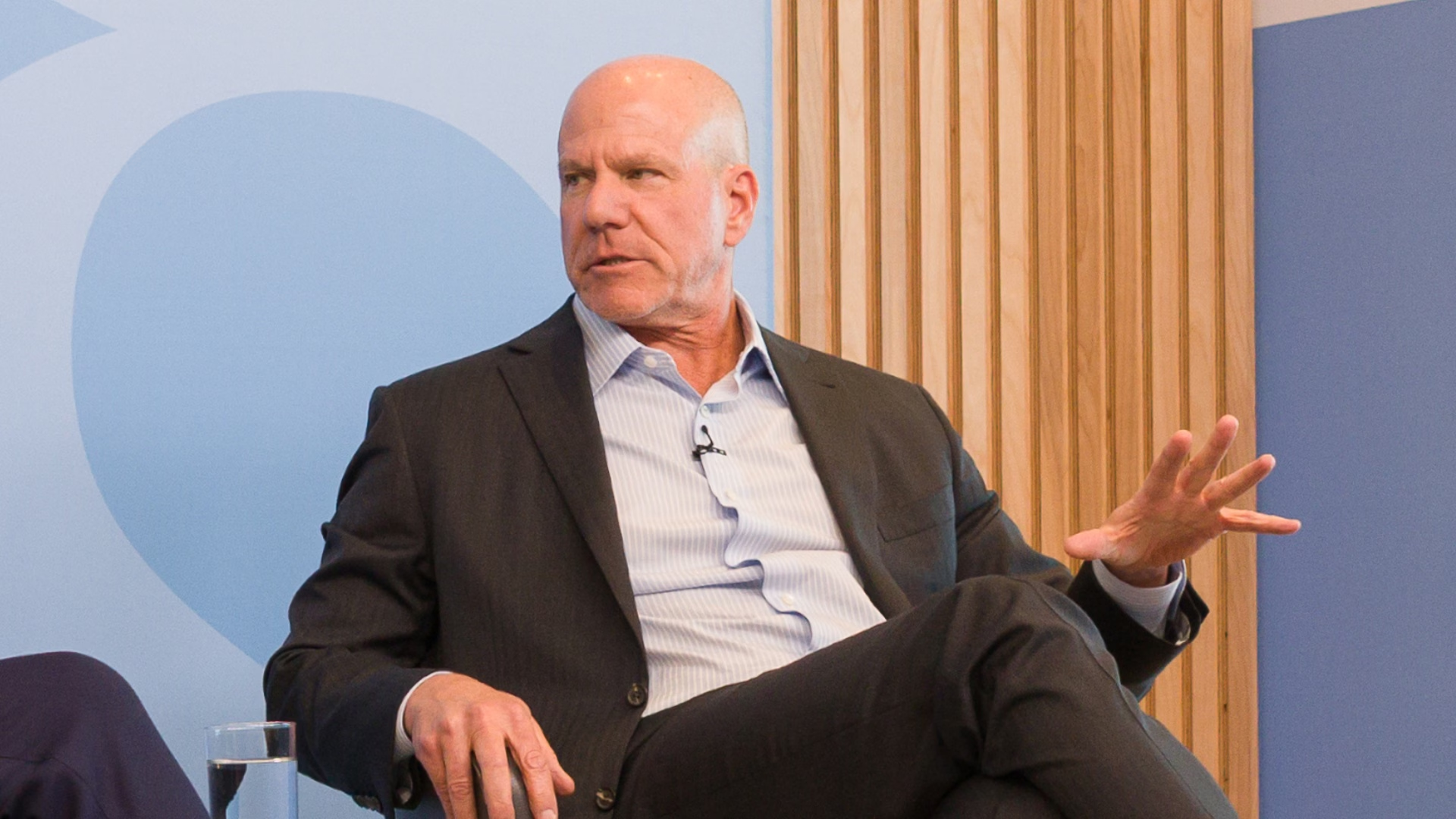
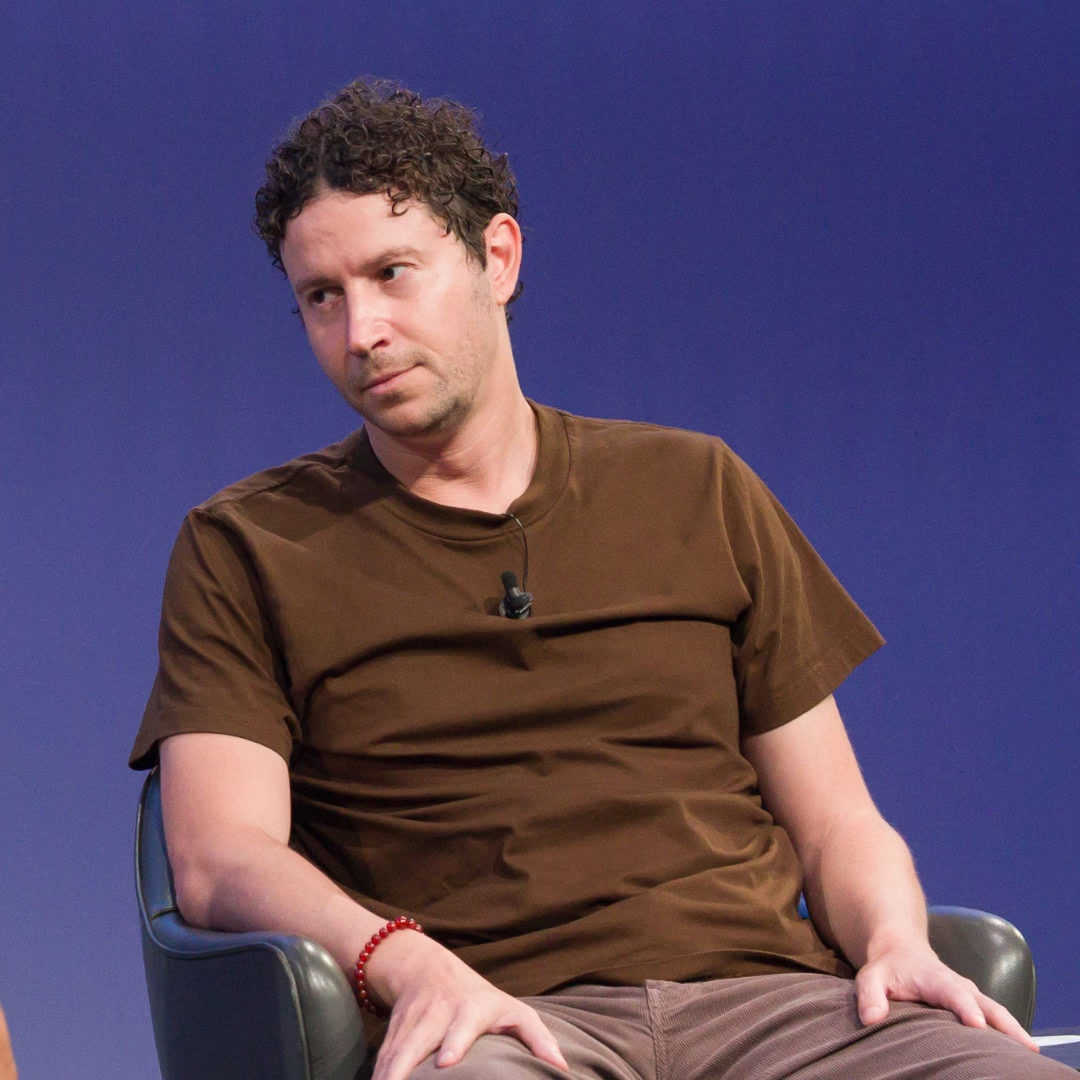
TPG has evolved into one of the world's leading alternative asset management firms, with over $300 billion in assets under management. Jon Winkelried, CEO of TPG and a Goldman Sachs alum, joins Matt McClure, global co-head of Investment Banking, to reflect on his career journey. From his early days as a summer analyst to serving as Goldman Sachs' co-president and co-COO, Winkelried discusses the pivotal moments that shaped the firm across decades, as well as his role in TPG's IPO, strategic expansion, and approach to navigating the AI landscape.
Transcript:
Jon Winkelried: The one thing that I feel is really important from a leadership perspective is if you're working in an organization or leading an organization that's filled with very motivated people, smart people, very high-quality people, you can't do things in a vacuum. And so, one of the things that is always sort of a guiding principle of mine is kind of bring people along.
[MUSIC INTRO]
Matt McClure: Welcome everyone to another session of Talks at GS. Delighted to be joined by Jon Winkelried, CEO of TPG and Goldman Sachs alum. Just to recap on some of your career. You were a summer analyst in 1981. You became a partner in 1990 at the remarkable age of 31. And in 2005 you became co-head of IBD. And then a year later you were named co-president and co-COO with Gary Cohn reporting initially to Hank [Paulson] and then subsequently to Lloyd [Blankfein]. And then you retired from the firm in 2009.
So, you joined TPG in 2015 as co-CEO, one of the world's preeminent private equity firms with over $300 billion of AUM. You became sole CEO in May 2021. And since then, there have been some really important milestones. And taking the company public in 2022 and then the Angelo Gordon acquisition in November 2023.
Walk us back to how your career started at the firm. Did you know what investment banking was?
Jon Winkelried: I was intrigued by Wall Street. But I didn't know anything about it. I found out that you could-- when you were a junior, you could apply to any of the graduate schools. And if you got accepted, you could replace your senior year in college with your first year in grad school. And so, I said, well, that's great. You know? Because, first of all, I was on financial aid to go through college. And I could save a whole year. And so, I did that.
So, I applied to business school. Got in. And my senior year of college was really my first year in business school. So, I started to try to quickly figure out, like, well, what do people do? You know, like how do you get a job in between your years in business school?
And, you know, I started hearing about kind of Wall Street. So, I didn't get a job. But I did meet a woman who was an investment banker at Lehman Brothers and she was very, very nice to me. And so, the next year, you know how Chicago has a bidding system for interviews. So, I bid all of my points for an interview at Lehman Brothers.
The day where the bidding closed, I got a letter in the mail from Goldman Sachs from a guy in investment banking. And it was a really nice letter. And I thought to myself, “wow, I mean, I don't know what to do now cause Goldman seems very, like, solicitous in this letter”. I didn't realize, of course, it was the letter that they sent to everybody. And bidding closed at midnight that night.
At, like, 11:15 I picked myself up. I went to the business school. I changed my bid to Goldman Sachs. And I bid all my points on the Goldman Sachs interview.
So, I go into this interview and I'm interviewing with a guy who is in sales and trading in the Chicago office. And I think I'm there for an investment banking interview. And I'm talking to him or whatever. And he goes, "Hey Jon," he goes, "Do you know what you're interviewing for?" And I said, "Yeah, like investment banking." He goes, "No, this is like sales and trading summer program." And he was like, "Listen, there's a lot of characteristics about you I like. Okay? But like, you've got to get your head out of your you-know-what, okay, and figure out what you're doing here. Okay?" I said, "I got it. I got it."
So, I left. I figured, okay, I'm dead. And I got invited back to the Chicago office. And then one thing led to another. I got invited to the New York office. They basically-- the summer program in sales and trading then was six people. Okay? Six people.
So, anyway, I got the job.
Matt McClure: At what point or how long had you been at the firm when you figured out, you know what, this is the career for me?
Jon Winkelried: Like a couple of days.
Matt McClure: Really?
Jon Winkelried: Yeah, yeah.
Matt McClure: Wow.
Jon Winkelried: Like a couple of days. When I got there, I was like “this is incredible. Like they pay people to do this?” I mean, I was like “this is amazing.” I mean, you know? And I just felt like very comfortable. Very at home. And I was like, "This is it."
And so, I spent a little time like trying to figure out what else was happening around the firm. And I realized that I wanted to go into investment banking, not sales and trading right away because I really felt like I would learn a lot more about what companies were doing, why they were doing it, etcetera, what was happening in terms of financing if I went into investment banking. And that's what I did.
Matt McClure: Just walk us through when they went public. What was that like?
Jon Winkelried: The first time I think the firm really considered going public, let's see, I think in 1986 where the partners got together and talked about going public. There was too much opposition to it at the time. There were a lot of worries about, you know, cultural dynamics at the firm. You know? And what made Goldman special. So, it didn't have any legs, you know?
And then it came up again I think in the early 1990s. The firm knew that its capital structure had to be addressed. But I do remember the process. And it was really kind of fascinating because there was a lot of really good work done by the core team. And one of the things they had to do is they had to work out sort of, like, how are the economics going to work? And we had this dynamic where you had a group of general partners who were clearly, obviously now kind of driving the firm, etcetera. And then you had a bunch of limited partners that had left recently who had been very important in the history of the firm, in building the firm. And so, how were they going to participate?
So, there was a very difficult debate about that in terms of how would value be distributed. I remember we had one partner meeting that was really sort of the very end of the process and at that time, there was probably like, I want to say there was close to 300 partners or something. Something like that. And they made a presentation about, you know, what the firm's going to look like as a public company.
Then there was a discussion about culture. And then they basically opened it up to the floor. And it was a pretty remarkable meeting because every single partner got up and talked, junior to senior. Every single person got up and talked and said what they thought about it, what they were concerned about, what they were enthusiastic about. And then there was basically a vote. And the vote was not an open vote. The vote was a silent vote. But I think the vote was something like 80-24. And that was it. And we, you know, we proceeded to go ahead and go public. And it was pretty exciting.
Matt McClure: And could you feel the difference in the firm in the days after it had gone public?
Jon Winkelried: There was a lot of focus, which I think was absolutely right, on how do we preserve the partnership culture? How do we preserve the orientation of the firm that had been so important and fundamental to how we operated? You know? Because remember, when we were a private partnership, there were different parts of the firm, but basically, you know, if you made a dollar, right, I earned some portion of that dollar. We had profit shares. Right? And so, the profit shares added up to 100.
So, that expression that we used to use around here, like, "we all eat from the same plate," that was the way it worked. And so, we were very much interested in preserving that. But what it did do was it opened up a lot of new opportunities in the risk profile of the firm. How we used our capital. What we were willing to do for clients. What we were doing for ourselves in terms of on balance sheet, etcetera. So, it did change. But I think it was subtle. And I think it was evolutionary.
Matt McClure: All right, let's pivot to TPG. So, how did you find the switch? You’d been at Goldman 27 years. And then you're on the buy-side principaling. Did that require a change in mindset? How did you adjust to that?
Jon Winkelried: Yeah. I mean, to some extent it did. When you get there and you're the co-CEO of the firm, you cannot say, "Well, this is what we used to do at Goldman Sachs." So, you learn that pretty quick.
When you're at Goldman Sachs, you have like the depth of this firm. It is extraordinary, right? At TPG, when I joined in particular, I mean we were quite a bit smaller than we are now. And it was essentially, you know, everybody had more than one job. And so, it was the entire culture is a producer-manager culture. And everybody basically is involved in multiple things.
And so, when I joined TPG, $64 billion or so in assets under management. The firm had one really large-scale strategy, which was the buyout part of the firm. Then a series of other strategies that were still trying to scale. From that time in 2015 to today when we're about $310 billion and much more highly diversified and much more developed, there's been a lot of change.
I knew TPG, by the way, because they were a client of ours. We did a lot of stuff with them. But I didn't know the firm that well. I got connected to the firm because the founder of Sixth Street Partners, Alan Waxman, worked for me at Goldman. And resigned to me when he left to go out and incubate this platform. And then when I retired from Goldman, he asked me to be an advisor to him. And so, that was my window into the firm.
And the thing that always struck me at that time about TPG was that the brand of the firm was much larger than the firm itself. I really felt like TPG was punching under its weight in a lot of respects. TPG, I think, had taken a couple of hard hits as a result of some decisions that were made on certain investments during that crisis. And so, were recovering from that.
So, when I got to the firm, the reputation, the brand, the reach of the firm was fairly strong. But the firm which much smaller than I think it would have otherwise been had it not had some of those hiccups. It was an interesting challenge.
At the time when I joined, I was recruited by the two founders. The one thing that distinguishes TPG from some of the other big firms is that it was founded by two guys that were part of a family office. They left the Bass family office in Texas to start TPG. All the other big private equity firms were really the product of Wall Street.
And so, what they were looking for is someone that I think could help them really sort of kind of drive the firm, drive growth, drive change, etcetera, try to be catalytic. And so, that's kind of the opportunity that I walked into.
Matt McClure: Given that the firm historically was more traditional, was it easy to get everyone rowing in the same direction towards more diversification and become a much larger, diversified alts firm?
Jon Winkelried: No, it wasn't easy. You know, the firm that I walked into, I would say was operating dramatically different than we are today. You're part of the buyout business. There’s, you know, you're depending on the carry to generate economics and wealth. And so, you know, you're focused on that, right? You're focused on that.
Trying to get people to believe in the idea that if we operated in a less siloed way, came together, and drove a one-firm orientation, that eventually, the place will be a lot more powerful, that our reach will be a lot broader, that our sourcing capability will be a lot more interesting. And frankly, a lot of the things I learned here in terms of building businesses at Goldman. It was hard work to kind of get people to think that way.
So when I interviewed at the firm, I interviewed with all of the senior business leaders. Half of them were, like, "How fast can you get here?" And half of them were, "I have no interest in you coming here." They said, "We don't need another boss. Okay? We're doing just fine." Right? And like, you know, "Go back to where you came from."
And so, I came into an organization where I'm going to focus on how I can contribute. I'm not going to push on a string with somebody that, you know, doesn't want me in their face. And my thesis was that if I could move the needle, okay, and start developing and building the firm and I had my ideas about how to do that, that eventually, it would come to me.
Matt McClure: Right.
Jon Winkelried: And you have to be patient when you go through a process like that. And that's exactly what happened.
So, we got to a point where, okay, like now people were more bought in. Now people were showing up in my office and saying, like, "Can I help?" You know? And you get over that hump. And it takes a few years to get over that hump.
That led us to the process of thinking about, all right, how do we really accelerate growth and get to the next level? And we started talking about the same thing that we went through here at Goldman in terms of institutionalizing the organization. How do we do that at TPG? And we started talking about, you know, going from a founder-led, founder-governed organization to a public company. You know? It was a lot of adjustment.
Matt McClure: Can you talk about how you're deploying AI within your firm?
Jon Winkelried: In the ten and a half years that I've been there, I think there hasn't been a single thing as powerful as AI that has brought the firm together. Because it's so impactful, both from the perspective of investing and where we want to focus and what its implications are to our portfolio, our current portfolio, and what the tools provide us with in terms of an unlock of efficiency and creativity internally.
And so, literally, every corner of the firm is engaged in some way in this process of trying to figure out how it's going to power us into the next leg.
Matt McClure: And when did you start on that journey?
Jon Winkelried: We were kind of dabbling in this probably two and a half years ago. And I think we-- it really hit us upside the head probably about a year ago. We also have a very interesting relative position because remember we have more people in New York than we do in San Francisco now, but we've been San Francisco natives now for a long time. So, we are literally within walking distance to everything AI.
So what we were able to do is get invested on the cap table of a number of these large companies relatively early. We were living in that ecosystem.
Matt McClure: A number of leaders within the audience, you've led and grown successfully a number of businesses. Any words of wisdom?
Jon Winkelried: Well, I think the one thing that I feel is really important from a leadership perspective is, you know, if you're working in an organization or leading an organization that's filled with very high-quality people, very motivated people, smart people, you can't do things in a vacuum. And so, one of the things that is always sort of a guiding principle of mine is kind of bring people along. That's number one.
Number two is decision making, obviously, you have to make decisions. But what I've always found is that what is the most important thing is people understanding what's motivating you or how you're making the decision. Because very often, you know, some people agree. Some people don't agree. But if they know why you're doing what you're doing and how you're processing it, I find that it makes those situations much more tolerable for people even if they don't agree with you.
And, you know, I went through kind of a transition myself in my career at Goldman Sachs. I was involved in, you know, businesses where we were doing a lot of capital committing, etcetera, where I was the subject matter expert. And there's always a transition for all of us where at some point you're leading and you're managing people or managing businesses where you're no longer the subject matter expert. And so, you have to transition to find a way to become relevant as a leader. How do you help them grow what they're doing? How do you help them think about how to lead?
And for me that happened at Goldman when I moved to London. You know, in FICC I basically was kind of running the whole credit side of the business. And I was a subject matter expert. And then when Hank asked me to go to Europe, you know, he called me one day and he said, "I want you to go over there. The trading businesses need a lot of leadership." And I said, "Hmm, you know, I don't know. Uproot my family. Blah, blah, blah." You know? I said, "I'm willing to go. Okay. Appreciate going on management committee. But I need you to tell me, guarantee me that if you change the structure of the leadership of FICC, okay, I'm the next person up. Global division head."
He said, "No." I said, like, "What do you mean, no?" You know? I said, "You've known me for, like," at this point it was like 17, 18 years. Like, "What else do you need to know?"
He said, "Listen. You have never been in a leadership position where you're going to be managing a whole bunch of people where they know way more about their business than you know about their business. And that's going to be a different sort of challenge for you. And so, go over there. Do what you're capable of doing. Things will take care of itself." That was very good advice.
Matt McClure: That was great advice.
Jon Winkelried: And I went there and, you know, six months later I was the global head of FICC. But that worked out. But that was a very important moment in terms of realizing that that was shifting. I had to train myself to be a better listener, understand what people were dealing with. And--
Matt McClure: It worked out well.
Jon Winkelried: Yeah.
Matt McClure: Thank you so much.
Jon Winkelried: Appreciate it. Okay. All right.
Matt McClure: It was awesome. That was great.
Jon Winkelried: Thank you.
This episode was recorded on June 9, 2026.
The opinions and views expressed herein are as of the date of publication, subject to change without notice, and may not necessarily reflect the institutional views of Goldman Sachs or its affiliates. The material provided is intended for informational purposes only, and does not constitute investment advice, a recommendation from any Goldman Sachs entity to take any particular action, or an offer or solicitation to purchase or sell any securities or financial products. This material may contain forward-looking statements. Past performance is not indicative of future results. Neither Goldman Sachs nor any of its affiliates make any representations or warranties, express or implied, as to the accuracy or completeness of the statements or information contained herein and disclaim any liability whatsoever for reliance on such information for any purpose. Each name of a third-party organization mentioned is the property of the company to which it relates, is used here strictly for informational and identification purposes only and is not used to imply any ownership or license rights between any such company and Goldman Sachs.
A transcript is provided for convenience and may differ from the original video or audio content. Goldman Sachs is not responsible for any errors in the transcript. This material should not be copied, distributed, published, or reproduced in whole or in part or disclosed by any recipient to any other person without the express written consent of Goldman Sachs.
Disclosures applicable to research with respect to issuers, if any, mentioned herein are available through your Goldman Sachs representative or at http://www.gs.com/research/hedge.html
Goldman Sachs does not endorse any candidate or any political party.
Subscribe to Briefings
Our weekly newsletter delivers the latest insights on economic forces shaping markets—from Goldman Sachs leaders, economists, and investors around the world.
You can unsubscribe at any time. For information about how your personal data will be used, visit Privacy Information and Resources.